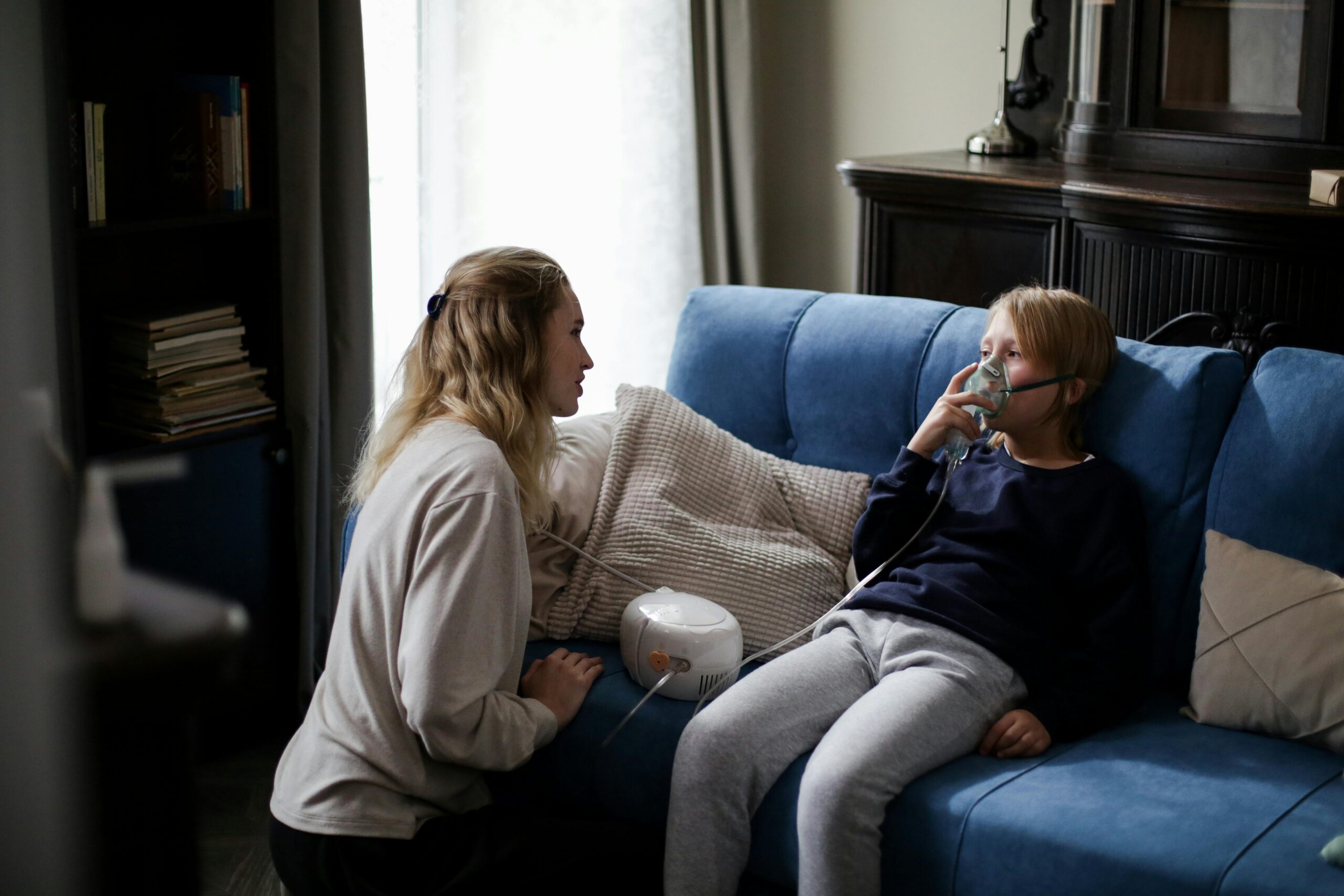
Today’s children are living through a quiet but devastating health crisis. According to data from the CDC, over 40% of the approximately 73 million children in the United States—ages 0 to 17—have at least one chronic health condition. From a biological and environmental perspective, we are witnessing what experts call the “Sickest Generation” in American history.
As we look at the rise in asthma, autoimmune diseases, and developmental delays, we must ask: What has changed so drastically in the last few decades?. The answer lies largely in the Indoor Environmental Quality (IEQ)—the chemical, physical, and biological characteristics of the air and surfaces within the buildings where our children spend the vast majority of their time.
The Sobering Reality of Pediatric Health
The statistics surrounding the health of our youth are more than just numbers; they represent a fundamental shift in pediatric wellness. Since the 1970s, we have seen a 270% increase in childhood obesity, with 1 in 5 children over the age of six now classified as obese. Furthermore, childhood cancer incidences have risen by over 40% since 1975.
Perhaps most alarming is the impact of the environment on respiratory health. The World Health Organization (WHO) estimates that 3.2 million deaths annually are attributable to indoor pollution, including 237,000 children under the age of five. When indoor air quality is poor, the likelihood of children developing respiratory conditions increases by up to 78%.
Key Statistics at a Glance:
- Diabetes: Over 350,000 children have been diagnosed with diabetes.
- Autism Spectrum Disorder: Now impacts 1 in 31 children by age 8, a staggering rise from 1 in 10,000 in 1960.
- Allergic Diseases: Over 50% of all allergic diseases are directly linked to indoor allergens.
Understanding Biological Vulnerability: Why Children?
To solve this crisis, we must first understand why children are uniquely susceptible to environmental toxins compared to adults.
1. High Metabolic and Respiration Rates
Children have a higher basal metabolic rate. Biologically, this means they breathe more rapidly and inhale a larger volume of air relative to their body size than adults do. If the air is filled with Particulate Matter (PM)—microscopic solids or liquid droplets—children take in a much higher “dose” of these pollutants every minute.
2. Immature Detoxification Systems
In adults, the liver and kidneys are highly efficient at filtering out toxins. However, in infants and young children, these systems are still developing. Babies struggle to detoxify chemicals as effectively, leading to a rapid accumulation of contaminants in their bloodstream and fatty tissues.
3. The "Floor-Zone" Exposure and Ingestion
Children spend a significant portion of their time on the floor. This is where concentrations of dust, dander, and heavy particles are greatest. Furthermore, infants exhibit “hand-to-mouth” behavior nearly 10 times per hour, meaning they don’t just breathe in pollutants—they ingest them.
The Three Pillars of Environmental Danger
Our current research identifies three primary areas where the indoor environment fails our children:
I. Airborne Particulates and Wildfire Smoke
We are seeing an increase in PM 2.5—particles smaller than 2.5 microns (about 30 times thinner than a human hair). These are particularly dangerous because they bypass the body’s natural defenses in the nose and throat, traveling deep into the lungs and even entering the bloodstream. Poor lung function from these particles can lead to COPD, bronchitis, and chronic asthma.
II. Endocrine-Disrupting Chemicals (EDCs)
Many common school and household items contain Plasticizers, BPA, and PBDEs. These are known as Endocrine Disruptors because they mimic or block the body’s natural hormones. Because hormones regulate everything from growth to brain development, exposure to EDCs during critical windows—like infancy or puberty—can derail neurological and reproductive development.
III. Bio-Aerosols: Bacteria, Viruses, and Mold
Infectious droplets can remain airborne for several hours if they are smaller than 5 microns. In crowded spaces like childcare centers, these “droplet nuclei” circulate through poorly maintained HVAC systems, leading to outbreaks of RSV, the flu, Whooping Cough, and Covid-19.
The Solution: Creating a "Guard" Around Our Children
While these challenges are significant, they are not insurmountable. At EnviroGuard Tech, we advocate for evidence-based solutions that align with the highest industry standards, such as ASHRAE 62.1 (Ventilation for Acceptable Indoor Air Quality) and ASHRAE 241 (Control of Infectious Aerosols).
1. Clinical-Grade Air Filtration
Standard HVAC filters often fail to capture the smallest, most dangerous viral particles.
- The Resolution: We advocate for the integration of HEPA (High-Efficiency Particulate Air) filtration. To be classified as HEPA, a filter must capture 99.97% of particles as small as 0.3 microns.
- Implementation: Portable units are effective during outbreaks, while ceiling-mounted systems provide consistent, long-term protection.
2. Transitioning to Green Cleaning
Many traditional disinfectants, such as bleach, contribute to poor IAQ by releasing Volatile Organic Compounds (VOCs). Some programs report bleach use at almost 90x per day, which is a massive exposure level for developing lungs.
- The Resolution: Utilize EPA Safer Choice and GreenGuard Certified products. These products are tested for over 10,000 chemicals, ensuring that “clean” does not have a toxic smell.
3. Advanced Sanitization Technology
Sanitizing surfaces is a temporary fix—germs begin to regrow the moment a surface is touched again.
- The Resolution: We look toward UV technology and Ozone technology to supplement manual cleaning. These technologies provide a way to sanitize everyday items without the constant use of wipes and foggants that add to the chemical load.
Moving Forward: The Critical First 1,300 Days
The first 1,300 days of a child’s life (from conception to age three) lay the foundation for their entire future. During this time, up to 1 million neural connections form every second.
In utero, the placenta and umbilical cord can be penetrated by many environmental chemicals, and since brain and skin barriers are not fully developed, toxins are absorbed more easily. This can result in premature birth, low birth weight, and diminished lung capacity. Every toxic exposure we eliminate is a hurdle removed from their development.
Immediate Actions for Schools and Parents:
- Monitor Air Quality: Focus on PM 2.5, NO2, and Radon levels.
- Maintain HVAC Systems: Filters must be changed regularly, and systems should use the highest MERV rating the system will allow (ideally MERV 13 or higher).
- Reduce Clutter: Eliminating dust-collecting cloth items and clutter reduces the habitat for dust mites and pests.
- Go Fragrance-Free: 1 in 5 people are negatively affected by scents, which are often just VOCs in disguise.
At EnviroGuard Tech, our mission is to provide the tools—from air monitoring to advanced filtration—that allow parents and educators to take control of the indoor environment. We don’t have to accept a future where 40% of our children are chronically ill. By following the science and implementing simple, high-impact solutions, we can protect the most vulnerable among us and ensure they have a Head Start on a healthy life.