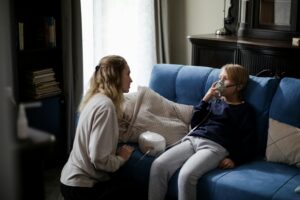
In the journey of human life, there is no period of development more rapid, complex, or fragile than the first 1,300 days. Spanning from conception through a child’s third birthday, this window serves as the biological blueprint for every system in the body.
However, this period of immense potential is also a window of extreme vulnerability. During these 1,300 days, environmental influences don’t just affect a child’s health today—they can permanently alter the trajectory of their development.
At EnviroGuard Technologies, we believe that protecting this window is the most significant impact we can have on the next generation. To do so, we must look at the science of why early childhood is uniquely susceptible to toxic exposure and how we can mitigate these risks.
The Biological Clock: Why 1,300 Days Matter
The “1,300 days” concept encompasses pregnancy (roughly 280 days) and the first three years of life (1,095 days). During this time, the body is performing a miraculous feat of engineering:
- Neurodevelopment: Up to 1 million new neural connections form every single second.
- System Formation: The respiratory, endocrine, immune, digestive, and reproductive systems are all undergoing rapid growth and “programming”.
- Epigenetic Priming: Environmental signals tell a child’s genes how to express themselves, essentially setting the “thermostat” for how their body will respond to stress and disease for the rest of their lives.
When toxic exposures occur during these stages, they don’t just cause a temporary illness; they can “derail” the development of these systems.
The In-Utero Foundation: Exposure Before Birth
The vulnerability begins long before a child takes their first breath. Science has debunked the old myth that the placenta is an impenetrable barrier.
The Placental Transfer
The placenta and umbilical cord can be penetrated by a vast array of environmental chemicals, including heavy metals and synthetic toxins. Because a fetus is producing billions of cells at an astronomical rate, even minute amounts of chemicals can disrupt the formation of critical biological systems.
Developmental Consequences
When the mother’s immune system is under constant stress from poor air quality or chemical exposure, it diverts energy away from the fetus. This can result in:
- Premature birth and low birth weight.
- Diminished lung capacity and higher risk of infant death.
- Delays in cognitive and motor skills that may not manifest until years later.
The Post-Natal Challenge: Why Babies are "Toxin Magnets"
Once a child is born, their interaction with the environment changes, but their vulnerability remains high. Babies and young children are not just “small adults”; they have a fundamentally different physiological relationship with their surroundings.
1. High Respiration Rates and Volume
Children breathe more rapidly than adults. Because their bodies are growing so fast, they inhale a significantly larger volume of air relative to their body size. If that air contains Particulate Matter (PM 2.5) or Nitrogen Dioxide (NO2), they are receiving a much higher “dose” per pound of body weight than the adults in the room.
2. The "Floor-Zone" Microenvironment
Babies spend the majority of their time on or near the floor. This is where the highest concentrations of heavy dust, dander, and settled chemical residues exist. Furthermore, infants engage in “exploratory ingestion”—putting hands and objects in their mouths nearly 10 times per hour—which means they ingest contaminants that adults never touch.
3. Limited Detoxification Capacity
An adult body is equipped with mature organs to process and expel toxins. In contrast, a baby’s liver and kidneys are still “learning” how to function. This leads to rapid accumulation—toxins stay in a child’s system longer and reach higher concentrations in their developing tissues.
Environmental Disruptors: The Scientific Culprits
To protect children, we must identify the specific toxins that threaten the 1,300-day window.
Particulate Matter (PM 2.5 and PM 10)
These microscopic particles—often from smoke, vehicle emissions, or industrial dust—enter the lungs and cross directly into the bloodstream. They can influence how the lung’s branches take shape and the quality of blood vessels within the lungs. Exposure is linked to chronic conditions like Asthma, which is the #1 reason kids miss school.
Endocrine-Disrupting Chemicals (EDCs)
Commonly found in plastics, personal care products, and even some classroom carpets, Phthalates and BPA disrupt the Endocrine System. These chemicals can interfere with the hormones that signal the brain how to develop, potentially leading to behavioral issues or developmental disabilities.
Volatile Organic Compounds (VOCs)
Found in many traditional “clean-smelling” disinfectants and air fresheners, VOCs like formaldehyde can cause immediate respiratory irritation and long-term neurological impact.
The Resolution: How EnviroGuard Technologies Protects the Window
Science shows that making small, simple changes to reduce these exposures can have a positive healing impact. At EnviroGuard Technologies, we provide the professional-grade tools needed to create a safe haven for early development.
1. Real-Time Air Monitoring
You cannot fix what you cannot measure. Our monitoring solutions focus on the “Greatest Harms”: PM 2.5, NO2, VOCs, and Radon. By tracking these levels, caregivers can identify when a room needs more ventilation or when outdoor pollutants (like wildfire smoke) are leaking inside.
2. Clinical HEPA Filtration
Because children inhale more air, that air must be as pure as possible. Standard filters often can’t handle the “viral load” or the finest particulates.
- The Resolution: We recommend HEPA (High-Efficiency Particulate Air) systems that capture 99.97% of particles as small as 0.3 microns. Ceiling-mounted systems are ideal for consistent room-level mitigation, while portable units provide flexibility during outbreaks.
3. "Clean is Not a Smell": Green Disinfection
Traditional bleach can be used up to 90 times a day in a single classroom, creating a “chemical soup” for infants on the floor.
- The Resolution: Switch to EPA Safer Choice or GreenGuard Certified products. We also leverage advanced technologies like UV and Ozone to sanitize surfaces and air without adding to the chemical burden of the room.
4. HVAC Optimization
Maintaining your HVAC system is critical. We help centers transition to MERV 13 filters or higher where possible, which can remove up to 90% of particles, provided the system is maintained to handle the increased static pressure.
Conclusion: A Call to Action for Caregivers
The first 1,300 days are a one-time opportunity. We have the greatest impact on the next generation when we act during these critical stages: in-utero, infancy, and early childhood.
By implementing Building Readiness Plans and Smoke Readiness Plans—as recommended by ASHRAE Standards 241 and 44—we move beyond “coping” with a sick generation and start building a healthy one.
EnviroGuard Tech is here to help you navigate these standards and implement the technology that protects our most vulnerable population.