When we think of air pollution, we typically picture towering smokestacks, congested highways, and smog hanging over a city skyline. However, the most immediate threat to our children’s respiratory health isn’t outside—it is trapped inside the very buildings meant to keep them safe.
Consider this: 1 in 6 people spend their day inside a school building learning, teaching or as staff. As Harold Wimmer, President and CEO of the American Lung Association, stated in January 2026, “Clean indoor air in schools is foundational for learning”. Yet, the invisible environment within these classrooms and childcare centers is quietly impacting the most vulnerable population.
In this third installment of The Sickest Generation series, we examine the anatomy of developing lungs, the microscopic invaders that threaten them, and how implementing clinical-grade solutions from EnviroGuard Technologies can turn the tide on pediatric respiratory disease.
The Anatomy of Vulnerability: How Developing Lungs Breathe
To understand why indoor air quality (IAQ) is so critical, we must first look at the science of pediatric lung development. A child’s respiratory system is not fully formed at birth; it continues to grow and mature through adolescence.
When airborne pollutants are inhaled, chemicals and particles enter the lungs and bloodstream. Because children breathe more rapidly than adults, they inhale a much higher volume of these contaminants relative to their body weight. Especially during pregnancy and early childhood, this toxic exposure can directly influence how the lungs form.
Specifically, pollutants can alter the number and quality of blood vessels in the lungs and dictate how the lung’s branches take shape. When lung branching and blood vessel formation are compromised, it directly affects oxygen distribution to the rest of the body. Over time, poor lung function can lead to severe chronic conditions, including asthma, bronchitis, and chronic obstructive pulmonary disease (COPD).
The Microscopic Invaders: What Exactly Are They Breathing?
The threats suspended in indoor air are invisible to the naked eye but carry devastating consequences for biological systems. We can categorize these airborne threats into two main groups: Particulate Matter and Bio-Aerosols.
1. Particulate Matter (PM) and Wildfire Smoke
Particulate Matter refers to tiny solid particles and liquid droplets suspended in the air.
- PM 10 to PM 2.5: While PM 10 (particles smaller than 10 microns) is harmful, PM 2.5 is considered the worst. These particles are so small—roughly 30 times smaller than the width of a human hair—that they easily bypass the body’s natural defense mechanisms in the nose and throat.
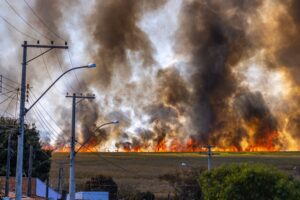
- Wildfire Smoke: With the increasing prevalence of wildfires, smoke poses a significant indoor threat. Fine ash and toxic chemical compounds from smoke easily penetrate building envelopes, drastically reducing indoor air quality and putting immense stress on the respiratory system.
2. Bio-Aerosols: Bacteria, Viruses, and Mold
Every time an infected person coughs, sneezes, or even speaks, they release infectious droplets into the air. The science of droplet transmission shows us exactly why childcare centers are hotspots for illness.
Droplets smaller than 5 microns remain airborne for several hours. The longer these “droplet nuclei” remain suspended in the air, the greater the risk of infection. As these infectious aerosols circulate through poorly ventilated rooms, they become the primary transmission vehicle for a host of airborne illnesses, including:
- The common cold
- Flu
- Whooping cough
- RSV
- Measles
- Covid 19
The Microscopic Invaders: What Exactly Are They Breathing?
The threats suspended in indoor air are invisible to the naked eye but carry devastating consequences for biological systems. We can categorize these airborne threats into two main groups: Particulate Matter and Bio-Aerosols.
1. Particulate Matter (PM) and Wildfire Smoke
Particulate Matter refers to tiny solid particles and liquid droplets suspended in the air.
- PM 10 to PM 2.5: While PM 10 (particles smaller than 10 microns) is harmful, PM 2.5 is considered the worst. These particles are so small—roughly 30 times smaller than the width of a human hair—that they easily bypass the body’s natural defense mechanisms in the nose and throat.
- Wildfire Smoke: With the increasing prevalence of wildfires, smoke poses a significant indoor threat. Fine ash and toxic chemical compounds from smoke easily penetrate building envelopes, drastically reducing indoor air quality and putting immense stress on the respiratory system.
2. Bio-Aerosols: Bacteria, Viruses, and Mold
Every time an infected person coughs, sneezes, or even speaks, they release infectious droplets into the air. The science of droplet transmission shows us exactly why childcare centers are hotspots for illness.
Droplets smaller than 5 microns remain airborne for several hours. The longer these “droplet nuclei” remain suspended in the air, the greater the risk of infection. As these infectious aerosols circulate through poorly ventilated rooms, they become the primary transmission vehicle for a host of airborne illnesses, including:
- The common cold
- Flu
- Whooping cough
- RSV
- Measles
- Covid 19
The High Cost of Poor Air Quality: The Asthma Epidemic
When the immune system is forced into a constant state of defense against airborne pollutants, the biological toll is severe. The most prominent resulting condition is asthma.
Asthma causes the airways to become inflamed, narrow, and swell, producing extra mucus and making it incredibly difficult to breathe. The statistics surrounding this condition are a stark reminder of our environmental failures. Currently, 1 in 12 children in the United States are diagnosed with asthma.
Beyond the physical suffering, asthma disrupts the fundamental goal of early childhood: learning and development. Asthma is the #1 reason kids miss school. Annually, it accounts for a staggering 13.8 million missed school days per year. When children are chronically absent, they miss out on critical social-emotional development, literacy foundations, and routine structure.
Decoding ASHRAE Standards: The Benchmark for Clean Air
To combat this crisis, the American Society of Heating, Refrigerating and Air-Conditioning Engineers (ASHRAE) has developed strict guidelines for building safety. All commercial buildings, including childcare centers and schools, must abide by ASHRAE standards, which represent the legal and ethical baseline for safe environments.
- Standard 62.1: This standard sets minimum ventilation rates and other measures to ensure acceptable air quality.
- Standard 241: Released at the direction of the Biden administration, this addresses the control of infectious aerosols. It sets minimum requirements for the amount of clean airflow needed to decrease disease spread and requires facilities to develop an Infection Risk Management Mode (IRMM).
- Standard 44: Released in November 2024, this standard provides guidance on how to protect occupants from smoke during wildfire and prescribed burn events. It mandates the development of a Smoke Readiness Plan to maintain safe indoor air quality during emergencies.
Defending the Air: Solutions from EnviroGuard Tech
Understanding the science and the standards is only the first step. The true challenge is implementation. How do schools and childcare facilities, often working with aging infrastructure and tight budgets, actually achieve this level of air purity?
At EnviroGuard Tech, we provide comprehensive, technologically advanced solutions designed specifically to meet ASHRAE standards and protect developing lungs.
1. Continuous Air Monitoring
You cannot manage what you do not measure. A comprehensive Indoor Air Quality (IAQ) management plan requires constant vigilance. Facilities should be monitoring for the greatest harms, specifically PM 2.5, PM 10, Nitrogen Dioxide (NO2), Volatile Organic Compounds (VOCs) such as formaldehyde, and Radon. Our advanced monitoring systems provide real-time data, allowing administrators to make immediate ventilation decisions before air quality reaches toxic levels.
2. Upgrading HVAC Filtration (MERV 13)
The first line of defense is your building’s existing HVAC system. Maintenance is key, and filters need changing regularly. We help facilities upgrade to the highest rating their system will allow. For example, MERV 13 filters can remove up to 90% of particles. However, because high-efficiency filters increase static pressure, systems must be properly assessed to ensure they can handle the upgrade without straining the equipment.
3. Clinical-Grade HEPA Air Purification
When HVAC upgrades are insufficient—or during critical events like wildfire smoke or viral outbreaks—localized air purification is mandatory.
We provide specialized air purifiers utilizing HEPA (High-Efficiency Particulate Air) filtration. These pleated filters are rigorously tested and must capture 99.97% of particulate matter as small as 0.3 microns. This is the exact threshold necessary to trap the “droplet nuclei” responsible for spreading RSV, Covid-19, and the flu.
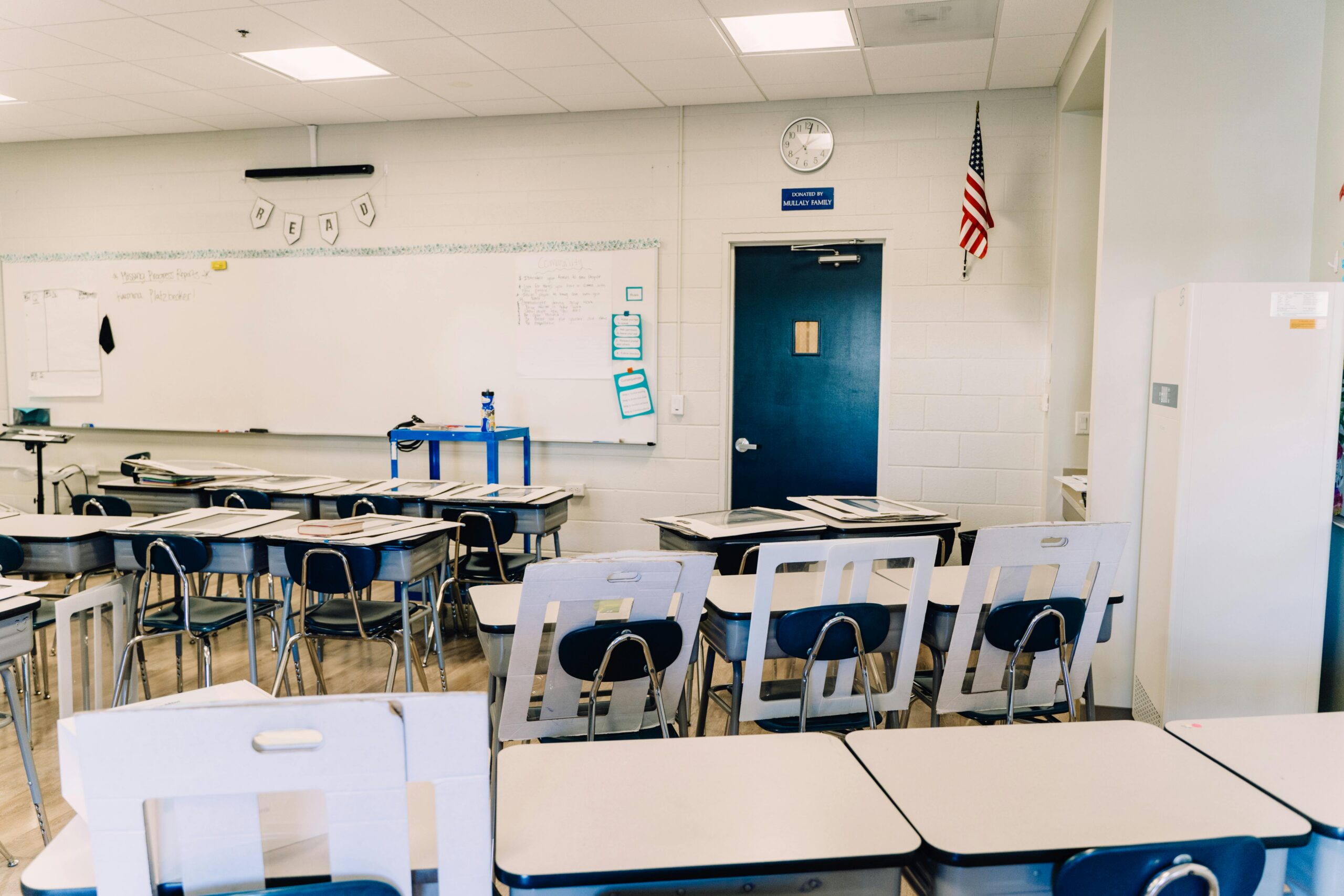
- Ceiling-Mounted Systems: For long-term, continuous protection, facilities should consider purchasing ceiling-mounted systems. These units integrate seamlessly into the classroom environment, continuously scrubbing the air without taking up valuable floor space.
- Portable Units: Portable units are great and can be used in conjunction with ceiling-mounted units during outbreaks or critical events. They offer the flexibility to move hospital-grade filtration into the rooms that need it most on any given day.
The Path Forward
We cannot control the air outside, but we have total control over the air our children breathe inside. By understanding the profound biological impact that PM 2.5 and infectious aerosols have on lung development, we can take decisive action. Through rigorous monitoring, HVAC optimization, and HEPA filtration provided by EnviroGuard Tech, we can ensure that every breath a child takes supports their growth, rather than hindering it.