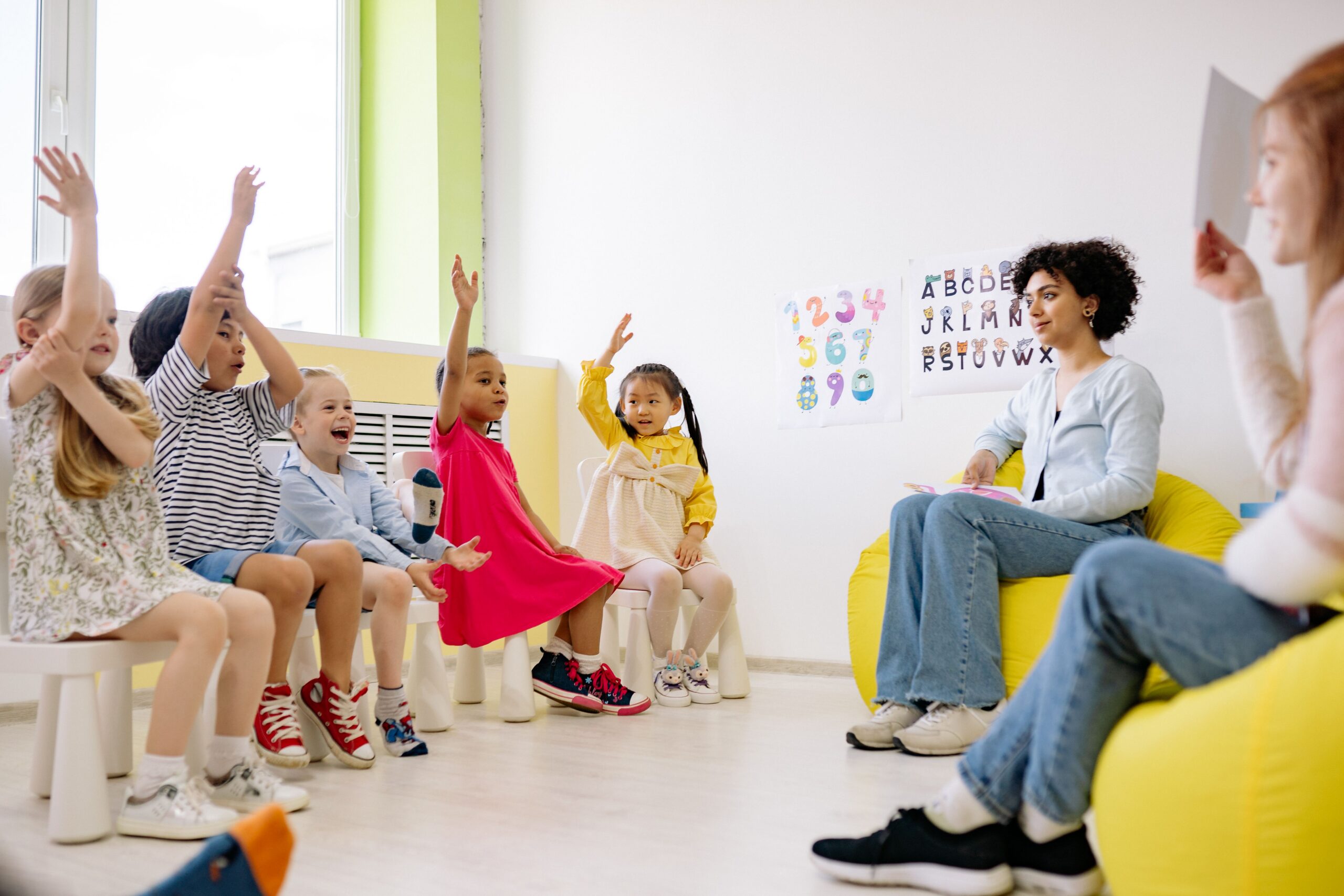
Anyone who has ever sent a toddler to daycare knows the pattern. The first few months feel like a revolving door of runny noses, fevers, and that dreaded phone call asking you to come pick up your child early. Parents joke about it, staff brace for it, and somehow it has come to feel normal.
But the constant churn of illness in childcare settings is not just bad luck or a rite of passage. It is the predictable result of a specific set of conditions: young children with developing immune systems, packed together in shared indoor spaces, touching everything in sight, for hours at a time. Understanding why these environments spread illness so efficiently is the first step toward doing something about it. And the good news is that the tools to change the equation already exist.
The Numbers Behind the Sniffles
Childcare is one of the most infection-prone environments a young child will ever spend time in. Research on daycare attendance has consistently found that the youngest children get sick the most often. In one long-running study of Danish daycare, children under the age of three averaged close to 24 sick days per year, while children between three and six averaged around 11. That is a staggering amount of lost time, and it lands squarely on working families and the centers that care for their kids.
The staff are not spared either. Childcare workers report some of the highest sickness absence rates of any profession, well above the average for the general workforce. When a teacher gets sick, ratios get strained, substitutes get called in, and the quality of care takes a hit. The illness cycle is not only a health problem. It is an operational and financial one.
The pathogens involved are no mystery. The U.S. Centers for Disease Control and Prevention has documented that childcare-associated outbreaks frequently involve respiratory viruses alongside gastrointestinal culprits like rotavirus, Giardia, and Cryptosporidium. One study even found that childcare providers carried illness home, with a notable secondary attack rate of diarrheal illness among their own household contacts. The germs that circulate in a daycare room rarely stay there.
How Illness Actually Moves Through a Room
To break the cycle, it helps to understand exactly how it works. Illness in a childcare center travels along two main routes, and both matter.
The first is the air. When a child coughs, sneezes, or even just talks and breathes, they release tiny respiratory particles that can linger and drift across a room. In a space with poor ventilation, those particles build up instead of clearing out. A recent cohort study tracking respiratory viruses in childcare centers, the DISTANCE study, confirmed what facility managers have long suspected: viruses like rhinovirus, influenza A, and RSV are actively present among children, staff, and the surfaces they share.
The second route is touch. Toddlers explore the world with their hands and mouths. Blocks, dress-up clothes, door handles, sink faucets, and the corner of every table become shared surfaces where pathogens hitch a ride from one child to the next. That same DISTANCE research detected respiratory viruses sitting on high-touch surfaces, confirming that toys and tabletops are not just background props. They are part of the transmission chain.
Most centers focus their efforts on the second route, with hand washing and surface wiping. Those habits matter. But cleaning a surface once an hour does little when the air itself is carrying a viral load all day, and when a wiped table is recontaminated within minutes by the next child. A real solution has to address both the air and the things kids touch, continuously rather than occasionally.
Why You Cannot Fix What You Cannot See
Here is the uncomfortable truth about indoor air. According to the Environmental Protection Agency, indoor air can be several times more polluted than the air outside. In a closed classroom full of small bodies, carbon dioxide climbs, fine particulate matter accumulates, and humidity swings in ways that can either help or hurt how long viruses survive. None of this is visible. A room can look spotless and still be a problem.
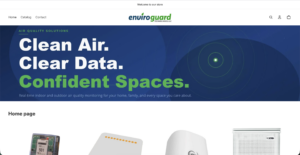
This is why measurement has to come first. Without data, every decision about ventilation and air handling is a guess. Continuous air quality monitors like the AirGradient ONE give childcare directors real-time visibility into CO2, particulate matter, humidity, and temperature, all on a dashboard that is easy to read and easy to share with staff and families. When CO2 starts creeping up in the infant room after nap time, you know. When a particular corner of the building consistently underperforms, the data shows you exactly where to focus.
For centers that want to understand what they are pulling in from outside through their ventilation system, the AirGradient OPEN AIR adds outdoor monitoring to the picture, which matters a great deal on poor air days or in buildings near busy roads. We unpacked how this kind of layered, data-driven approach works across facility types in our look at smart air quality solutions for modern facilities.
Clean the Air, Not Just the Counters
Measurement tells you where the problems are. The next step is reducing the pathogen load in the air itself.
Ventilation is the foundation. Bringing in more fresh air dilutes whatever is circulating indoors. But ventilation alone often is not enough, especially in older buildings with HVAC systems that were never sized for the way the space is actually used today. That is where in-room air purification earns its place. The INVZBL air purification systems combine HEPA-grade filtration with UV-C disinfection to capture particles and inactivate biological threats at the same time. The N-Air ceiling panel, for example, is designed to pull air up and away from the breathing zone where children spend their day, working quietly in the background without disrupting the room.
UV-C is not a marketing gimmick. At the germicidal wavelength near 254 nanometers, UV-C light damages the genetic material inside viruses and bacteria so they can no longer replicate or infect. Peer-reviewed research has repeatedly demonstrated its effectiveness, including studies showing that common respiratory viruses can be inactivated at relatively low UV-C doses. You can read more about the underlying science in this review of UV-C surface disinfection.
The Shared-Toy Problem Nobody Talks About
Even with clean air and clean hands, there is still the matter of the objects themselves. Toys, art supplies, nap mats, and learning tools pass through dozens of little hands every day, and wiping each one down by hand is both time-consuming and inconsistent.
This is where UV-C disinfection cabinets quietly solve a stubborn problem. The INVZBL UV-C sanitizing cabinets run a short disinfection cycle, no toxic chemicals required, and kill viruses, bacteria, mold, and even pests like lice on the items kids handle most.
A countertop unit can fit into an existing classroom routine, letting staff disinfect shared items in minutes between activities rather than scrubbing them one by one. It is a practical answer to a real daily challenge, and it closes the loop on the touch-based transmission route that air handling alone cannot reach.
A Realistic Plan for Childcare Leaders
None of this requires gutting your building or blowing up your budget. A phased approach lets a center start seeing results quickly.
Start by measuring. Place monitors in your highest-occupancy rooms and establish a baseline before you change anything. Next, find the worst-performing spaces, because the data almost always reveals that some rooms are far worse than others. Then address ventilation and filtration together, improving fresh air delivery where you can and adding purification where ventilation falls short. After that, layer in surface disinfection for the toys and shared items that drive touch-based spread.
Finally, keep monitoring and share the results, because parents and staff care deeply about this, and transparent reporting builds the kind of trust that fills enrollment lists.
This same logic applies well beyond daycare. We have written about why clean air and proper sanitizing are no longer optional in shared spaces, and the stakes are especially high for the youngest among us, as we explored in The First 1,300 Days and The Air They Breathe.
Healthier Rooms, Fewer Sick Days
The constant cycle of illness in childcare settings has been treated as inevitable for so long that most people have stopped questioning it. But it is not inevitable. It is the product of conditions that can be measured, understood, and changed. Cleaner air means fewer airborne viruses drifting between children. Smarter disinfection means fewer pathogens riding from hand to mouth on a shared toy. Together, they translate into fewer sick days, steadier staffing, and the kind of environment where kids can actually do the work of being kids.
EnviroGuard Technologies helps childcare centers, schools, and facilities put this exact approach into practice, starting with measurement and building toward lasting protection. If you are ready to find out what your rooms are actually circulating, reach out to our team to talk through what a healthier center looks like for you.
EnviroGuard Technologies provides advanced air quality monitoring and purification solutions for schools, childcare centers, healthcare facilities, and commercial buildings. Learn more at enviroguardtech.com.